
A Recipe for Cells
By breaking E. coli apart, all the way down to molecules, researchers hope to recreate the recipe from which it is built. Their efforts may prove futile.
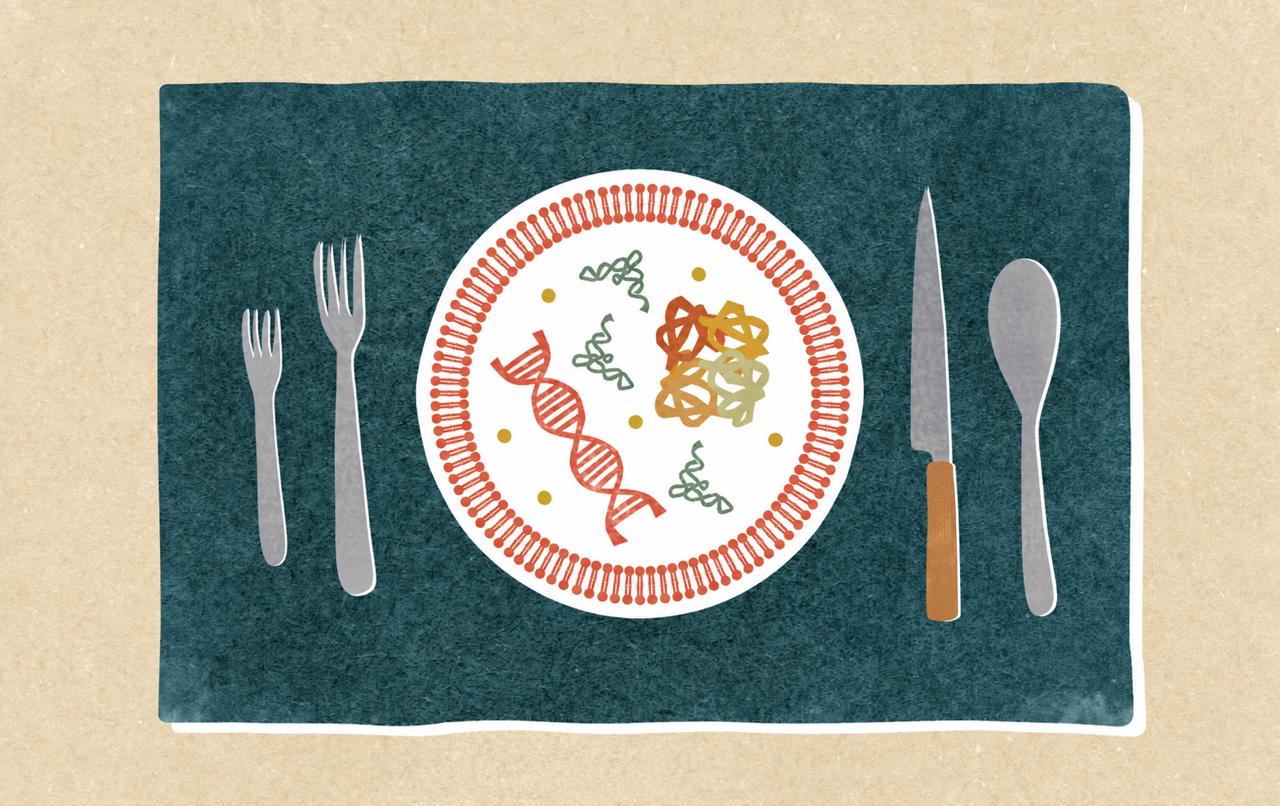
Biologists like to debate whether life can be reduced to chemicals or, conversely, whether chemicals can be used to assemble a new organism from scratch. In his 1911 book, The Mechanism of Life, Stéphane Leduc (who coined the term “synthetic biology”) argued that life can be fully explained by its molecules and interactions between them:
Life is not a substance but a mechanical phenomenon; it is a dynamic and kinetic transference of energy determined by physico-chemical reactions.
A few years later, naturalist John Burroughs, seeking to refute Leduc, argued the opposite: that living organisms exhibit additional “organizing tendencies” that chemicals alone cannot explain. Writing in The Breath of Life, published in 1915, Burroughs asserted that:
We can analyze the material elements of an organism, but we cannot synthesize them and produce the least spark of living matter.
Who is correct? My gut nudges me to side with Leduc, but it’s also been more than 100 years since Leduc posed his argument, and nobody has made life by mixing together inert molecules.1
The truth is, cells are ridiculously complicated things. Even the simplest ones have millions of proteins, metabolites, RNA and DNA, all tightly packed and jostling around within a lipid membrane. Each protein collides with trillions of water molecules per second, and glucose molecules ping-pong around at 460 miles per hour. Many cellular reactions are also stochastic, or “noisy,” meaning that chance encounters between molecules cause their timing and outcomes to vary even in identical cells.
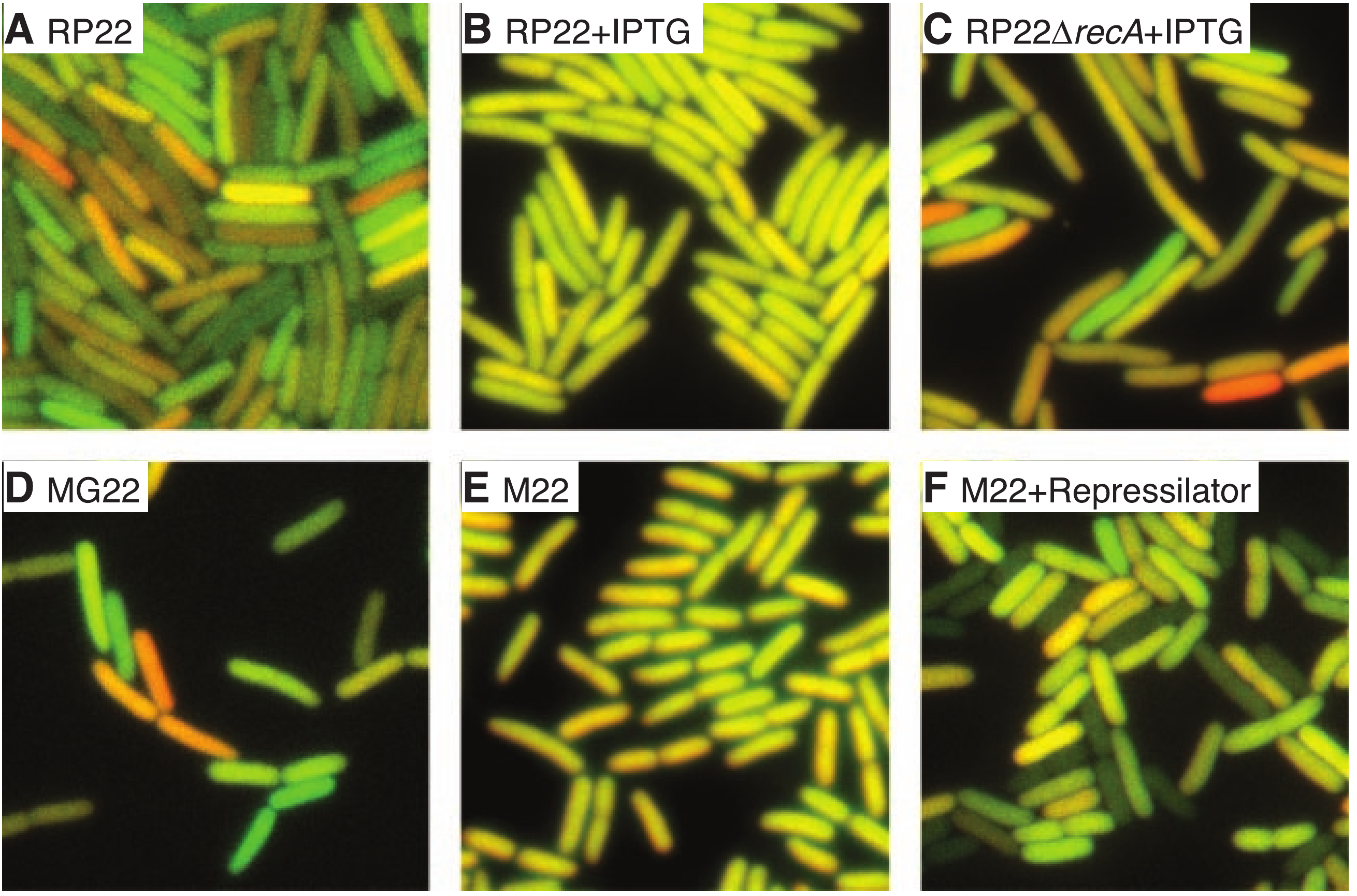
In one experiment, published in 2002, researchers studied genetically identical Escherichia coli cells carrying genes for two fluorescent proteins, one cyan and one yellow. Each was placed next to an identical promoter to which the LacI repressor could bind, and thus “shut down” the gene’s expression. The researchers photographed the cells under a microscope and measured the fluorescence from each protein separately.
Despite being genetically identical, the cells differed in brightness and color balance. Some cells made more cyan than yellow, and others made more yellow than cyan. These differences were often substantial, with a standard deviation of 40% of the mean.
Yet, despite the “noise” of biochemistry, life persists. It has found a way to flourish within this complexity and, for billions of years, cells have spawned new cells by turning simple molecules, such as sugars and amino acids, into more complex assemblages, beating back the tides of entropy. Or, as the Austrian physicist Erwin Schrödinger wrote in his classic 1944 book, What Is Life?, cells refuse to succumb to chaos “by eating, drinking, breathing and (in the case of plants) assimilating.”2
Leduc may have been right when he said that life can be explained purely by chemistry and physics, but it’s also clear that we can’t yet recreate the reactions necessary for life purely from synthetic chemicals. Perhaps the reason is that we don’t understand how life adapts and persists despite its noise and complexity. We may be able to collect all the ingredients needed to make a cell, but we are as blind as amateur cooks without a recipe when it comes to assembling them.
To create any given cell, we must first figure out what it is made from. How many atoms—and how much energy—does it take to build a new one? By tallying the parts, it becomes clear why humans can disassemble cells and understand each piece in isolation but struggle to put them back together and make them roar to life.
What Cells Are Made From
Let’s build an inventory for E. coli, the little bacterium that is the subject of more than 100,000 published research papers. Scientists have studied many types of E. coli, from “flesh-eating” variants to engineered strains that act as living “camera film.”3 For our purposes, let’s take a median example of this species and pick it apart. What is it made from?

About 70% of its mass is water. The other 30%—the “dry mass”—is everything else: DNA, RNA, proteins, lipids and so on. DNA makes up just 3% of dry mass, yet encodes all the information needed for the cell to grow, divide, adapt and evolve.4 The bulk of this dry mass, 55%, is protein, the large molecules that catalyze reactions and help control which genes switch “on” or “off.”5
Proteins make up the bulk of the dry mass for a few reasons. First, there are lots of them, and each protein is heavy. A single E. coli cell has about two million proteins floating around, each built from hundreds of amino acids. If the cell were blown up to the size of a tennis court, each protein would be roughly the size of a tennis ball.
Why are proteins so big? For one, large proteins fold faster than small ones due to cooperativity, meaning, basically, that one part of a protein coaxes another part to snap into place.6 Enzymes—proteins that speed up chemical reactions—need the extra bulk to build pockets, or cavities shaped in such a way that only certain molecules can enter and reach the active site. The enzyme that attaches tyrosine to its tRNA, for example, prefers tyrosine over phenylalanine—a molecule that differs by just one oxygen atom—by a ratio of more than 100,000-to-one, simply because its “pocket” has evolved into a structure ideally shaped for tyrosine.
Although cells have millions of proteins floating around, there are only a few thousand types. Some proteins are abundant, with millions of copies, whereas others are rare; for example, there is only a handful of RepA proteins, essential for DNA replication, present in the cell at any one time. The distribution of protein counts is also long-tailed, meaning that the 100 most abundant protein types account for more than half of all protein molecules in a cell.7
In the 1970s, most biologists thought EF-Tu, a protein that delivers tRNAs to ribosomes during protein synthesis, was the most abundant. This made intuitive sense because every E. coli has tens of thousands of ribosomes, and EF-Tu helps to quickly “feed” amino acids to them.
But in 1979, a study found that the most abundant protein is actually Braun’s lipoprotein, or Lpp, with more than 700,000 copies per cell. Lpp is a small protein that staples the cell’s outer membrane to its peptidoglycan layer, thus preventing it from blistering and leaking out viscous cytoplasm.8


After proteins, about 20% of the cell’s dry mass is RNA, of which a majority is ribosomal RNA.9 Each ribosome is two-thirds RNA by mass; these big machines have long threads of RNA inside, about 4,500 nucleotides in length. If you were to take the strands of RNA from a single ribosome and stretch them out, end to end, they would measure about 2.1 micrometers in length, longer than the entire cell.
Finally, lipids make up about 10% of a cell’s dry weight. There are about 30 million lipid molecules in each E. coli, beautifully packed into a double layer that stretches around the entire cell. If this membrane were pressed into a flat sheet, it would cover about 6 µm² of space. It would take 10,000 of these sheets, neatly sewn together, to cover the period at the end of this sentence.
Clearly, then, a cell has many molecules. How much energy is needed to build them?
One might assume the answer is “a lot”! After all, a cell has millions of proteins, each assembled from hundreds of amino acids.10 For currency, cells pay for this work using ATP, a small molecule that, when broken, releases energy to power chemical reactions. Adding just one amino acid to a protein costs about four ATPs. Energy is also burned to build DNA, RNA, lipids and every other molecule.11 Surprisingly, though, the total amount of energy needed to make a cell is very small (at least from our human-sized perspective).
Scientists have used biochemical calculations to estimate the energy required. By measuring how much food is eaten and how many new cells are created by bacteria in a flask, for example, they can then build models, based on known metabolic pathways, to predict how much ATP the bacteria have spent. And for an E. coli weighing about 0.3 picograms, producing another cell’s worth of material costs about 10 billion ATPs. These ATP molecules, in turn, are made from two to three billion glucose molecules. (A standard cube of sugar weighs four grams, and would have enough molecules to make something like five trillion cells.) The ATP, when burned, releases about 0.8 nanojoules of energy. Lifting a small apple one meter off the ground is roughly the energy needed to build one billion cells.12 This is highly efficient.
These are just estimates, of course, and the numbers get fuzzy based on assumptions.13 Some energy is always lost as heat, for instance, and the actual ATP cost goes up or down based on cell size, nutrients, oxygen supply and growth rates.14
In the laboratory, we already have synthetic tools to build parts of cells. It is easy to assemble amino acid chains using solid-phase peptide synthesis, for example, even though long proteins are still difficult to make efficiently by chemical synthesis. The laboratory process is also woefully inefficient. Chemists first attach an amino acid to a little bead, chemically join the next amino acid, wash away the reagents, and then repeat this hundreds of times. Cells, for comparison, do all of this in minutes, for orders of magnitude less energy, while building thousands of different proteins using solely atoms taken from their environments.
But now that we have a nearly complete list of the molecules in a cell, along with estimates of the energy needed to assemble them, we can finally ponder ways to arrange them and judge how close we might be to the possibility of “creating life.” The reason nobody has succeeded so far, I suspect, is that we haven’t yet mastered the fault tolerance or exquisite regulation required to do so.
Woeful Dynamism
It’s a short walk from my Berkeley apartment to a grocery store, where I can find the same ingredients the chefs at The French Laundry and other Michelin-starred restaurants cook with. Even so, I can’t assemble these ingredients into a prize-winning dish. I don’t know how to finesse them, or feel when a sauce has thickened just enough to pull it off the burner. More importantly, if an ingredient goes missing, I have no way to adapt or modify a dish on the fly, using my understanding of saltiness and sweetness, sourness and bitterness alone. A list of ingredients is not a recipe, and a recipe does not imply mastery of cooking.
The most amazing thing about cells, then, is not that they are packed with millions of proteins and other molecules and still manage to work. Rather, it’s that (as in the case of E. coli) they can re-make themselves every 20 minutes; they are producing millions of machines and adapting them on the fly and in the face of enormous uncertainty.15 The most amazing thing about life is that it persists despite the noise.
Consider one small part of a cell: DNA replication. In a 1998 paper in Cell, a pair of MIT biologists did a thought experiment in which they scaled up DNA to a width of one meter. In that scenario, DNA polymerase (the enzyme responsible for copying it) would be the size of a FedEx truck. Copying the E. coli genome would require two of these trucks, each moving in opposite directions at speeds of 375 miles per hour. Over the span of 40 minutes, these trucks would deliver five million packages and make just one error every 106 miles.16
At the same time that FedEx truck is speeding by, thousands of ribosomes are busily making proteins, enzymes are converting millions of molecules each second, and the membrane is adding lipid molecules to expand, preparing to make a daughter cell. Seemingly, this would offer thousands of opportunities for something to go wrong. At this scale, and these speeds, even rare errors can accumulate and kill the cell. And yet life persists. It remakes itself even when things inevitably go wrong. If human builders are ever to rival the complexity and dynamism of a cell, then we not only need to find the ingredients, but also arrange them in ways suited to extreme speeds, forces and noise.
Two factors are especially critical.
First, populations of cells have a high fault tolerance, partly because they contain so many cells and each cell differs from its neighbors. A threat that kills some cells may spare others. These differences, when multiplied across millions of cells in a group, are one way that cells “adapt” to uncertainty and persist.
For a 2020 study, researchers deleted two genes encoding enzymes required for biosynthesis of isoleucine, an essential amino acid used to make proteins. Without it, cells will eventually die. The researchers knocked out these genes, put the sick bacteria into little tubes without isoleucine, and then waited. For the next 70 hours, the bacteria appeared dead. But then, slowly, some of the cells began to divide.
After sequencing these cells, the researchers found that about a dozen mutations had randomly arisen in the population, mainly in a gene encoding MetC, an enzyme responsible for making another amino acid called methionine. The mutations shifted the cell's metabolism slightly, enabling them to make an isoleucine precursor instead.17 The few mutated cells from that initial population had inadvertently hit upon a solution to their molecular dilemma by rewiring a separate pathway, thus allowing the population to survive.18
Second, cells are robust despite uncertainties because they can, in some cases, sense relative changes while ignoring absolute ones. Such sensitivity proves useful when the environment changes and a cell must adapt without re-assembling molecules.
Consider an E. coli cell foraging for food. Little protein sensors embedded in its cell membrane detect the local concentration of food particles. As the cell spins its flagella and moves forward, the sensors take measurements in real time. If the food concentration dwindles, the cell is more likely to “tumble” and swim in a new, potentially more promising direction. But if the concentration of food goes up, the cell is less likely to tumble, and tends to keep swimming forward longer.
This is called chemotaxis, and the most amazing thing about it is that, within certain concentration ranges, the cell’s response depends on relative rather than absolute concentrations. The cell instead computes fold-changes, easily tuning its response to environments with much more or less food.
Regardless of whether the concentration of food rises from one to three, or from 10 to 30, the cell “processes” either change as simply a three-fold increase. Responding to a ratio, rather than absolute numbers, allows the bacterium to find more food regardless of its internal noise or huge changes in its environment.19 The bacteria are effectively judging changes against a baseline, enabling the same sensors to work across environments with very different concentrations. They are “compressing” their environment. (Chemotaxis is so remarkably sensitive, in fact, that E. coli can swim toward higher concentrations of an amino acid even when it is as dilute as one milligram dissolved in 2,300 liters of water.)
These examples are relevant to efforts to build a cell. It is not enough merely to understand which ingredients to include at which concentrations, but also to note that these ingredients will not work in all environments, and must be able to adapt to an extreme range of situations. Instead of trying to build “a” cell, then, we ought to build many variants, and then let evolution select the design best suited to life.20 Once a cell can reproduce with a selection mechanism, evolution can improve it.
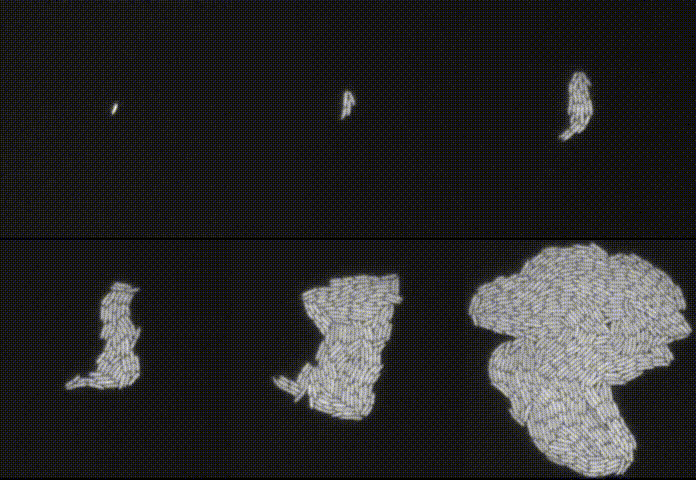
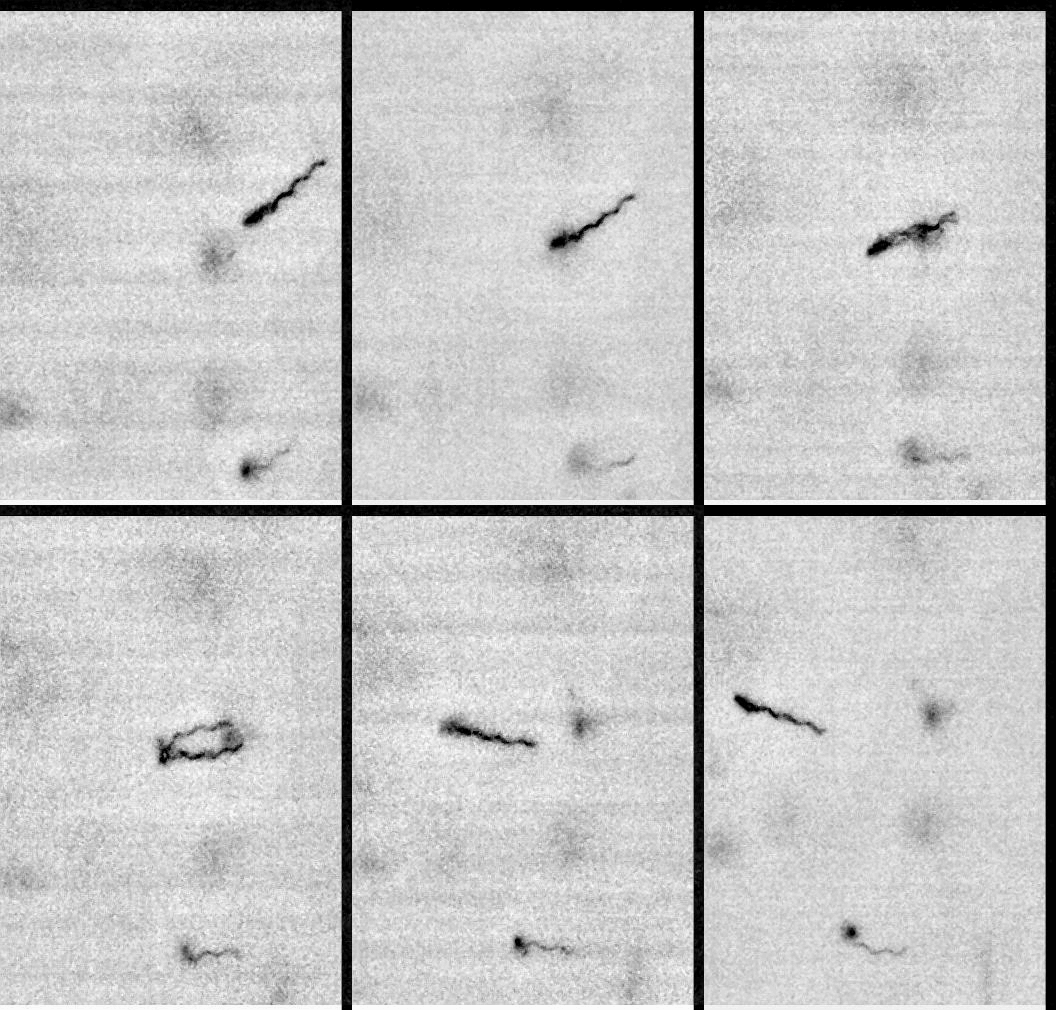
Humans have a borderline-obsessive desire to define parameters precisely, to understand every knob in a machine and fine-tune each accordingly. But cells do not care. They deliberately vary their parameters and dial knobs up or down to create variation. When it comes to science, humans care about understanding, whereas cells care about survival, and these goals can get in each other’s way.
Returning to the Leduc–Burroughs debate, building a viable cell probably doesn’t require a mysterious organizing force or vitalist “spark.” Sensing, adjusting, repairing and reproducing are all tasks carried out by molecules and the physical interactions between them. But it’s also true that our understanding of molecular interactions remains a bit fuzzy, and cannot fully explain cells’ ability to adapt on the fly. Molecules may be necessary to explain life, but they’re also just one small part of the recipe.
Notes
- ↑ Those siding with Burroughs may soon be proven wrong. The Biotic team is working hard on this problem, and they’ve predicted a perpetually dividing cell by 2030. I’m skeptical, as might be clear from my interview with Kate Adamala.
- ↑ Some cells, like Vibrio natriegens, can divide in just nine minutes.
- ↑ No two E. coli are identical. Even members of the same species have wildly distinct sets of genes. For a 2026 paper, researchers compared 1,200 complete E. coli genomes and found that they collectively had about 25,000 “gene families,” only 3,000 of which were present in at least 99% of the genomes. Most genes, in other words, only show up in some small portion of E. coli, so no two members of the same species are exactly the same.
- ↑ It’s difficult to calculate just how much information is stored in the DNA of a cell. A typical estimate for E. coli is about 1.16 megabytes, or less than one photograph on your phone.
- ↑ A typical E. coli cell (when dried) has 1010 carbon atoms and a chemical formula of C4.4H7.2O2.1N0.8P0.086S0.039. For every 4.4 carbon atoms, the cell has 7.2 hydrogens, 2.1 oxygens, 0.8 nitrogens, and tiny traces of sulfur and phosphorus.
- ↑ This has been measured directly. Researchers measured how eight different proteins fold by attaching red and green fluorescent dyes to amino acids that sit far apart when unfolded but come together when folded. As the dyes get closer, the green dye transfers energy to the red dye instead of emitting its own light, making it possible to record this “flash.” The largest protein transitioned in 0.7 microseconds, compared to 3.1 for the smallest.
- ↑ Many copies of each protein are needed because enzymes can only convert so many substrates per second. If a cell needs to make something fast (like an antibiotic-resistance molecule), then it must stock many copies of that enzyme! Proteins that help make other proteins also tend to occur in higher numbers.
- ↑ A 2023 paper in Science Advances used atomic force microscopy to visualize Lpp in individual cells and concluded that each cell contains up to one million copies. This makes sense; each cell membrane is built from about 30 million phospholipid molecules, so many Lpps are needed to hold them together.
- ↑ Messenger RNA makes up less than 1% of the cell mass of E. coli. It is among the least abundant types of RNA.
- ↑ Polymerizing a single amino acid onto a growing chain costs about four high-energy phosphate bonds (two to charge the tRNA, plus two GTP per elongation cycle). A 300-amino-acid protein therefore costs about 1,200 ATP-equivalents just to assemble, not including the cost of making the amino acids themselves.
- ↑ For DNA and RNA, each phosphodiester bond costs about two ATP-equivalents, not including costs for nucleotide biosynthesis.
- ↑ Each ATP molecule supplies about 8 × 10⁻²⁰ joules of energy.
- ↑ There are also other estimates out there. See Martin (2025), Table 3, which gives estimates that include building-block synthesis, polymerization, and transport. When grown in glucose and inorganic salts, Martin estimates six billion ATP for a 0.3-picogram cell, not including general maintenance costs. Also see Farmer and Jones (1976).
- ↑ The ranking depends on the nutrients available and what costs are counted. In Martin’s glucose-based calculation, protein synthesis has the largest ATP cost, followed by RNA synthesis; lipids account for a small fraction. Transport is counted separately, and general maintenance is excluded.
- ↑ Humans tend to employ machine-like metaphors when talking about cells (myself included). We think of genes as “gears” or proteins as “springs” that all work together in a logical way. In reality, cells are unlike any machines made by humans. They are governed by stochastic forces; they change from one generation to the next; and they can even acquire, or swap out, parts on the fly.
- ↑ The paper continues: “The mechanical prowess of this complex is even more impressive given that it synthesizes two chains simultaneously as it moves. Although one strand is synthesized in the same direction as the fork is moving, the other chain (the lagging strand) is synthesized in a piecemeal fashion (as Okazaki fragments) and in the opposite direction of overall fork movement. As a result, about once a second one delivery person (i.e., polymerase active site) associated with the truck must take a detour, coming off and then rejoining its template DNA strand, to synthesize the 0.2 km (0.13 mile) fragments.”
- ↑ MetB, an enzyme normally used in methionine synthesis, is able to perform a secondary reaction to supply the missing isoleucine precursor. Mutations elsewhere in the pathway increased the flow through this reaction.
- ↑ This doesn’t only happen with genetic mutations, either. Sometimes, stochastic fluctuations between otherwise identical cells can also lead to antibiotic resistance, and thus protect an entire population from extinction. For a 2004 paper, researchers exposed E. coli cells to an antibiotic and found that some cells survived purely by chance; they had a short-lived state (not any genetic mutation) that rendered them immune. When those survivors regrew, their descendants were susceptible to the drug.
- ↑ The same fold-change detection underlies many famous signaling pathways, including Wnt.
- ↑ This is what Biotic is doing. But they are trying to build one cell, and then use evolution to make it robust. My argument is that we could also do chemical synthesis experiments where we systematically vary the ratios of ingredients to see if anything viable emerges.
Feedback
Found an error or have a question? I update these essays based on your feedback. If you send a comment that improves the essay, I'll publish your name on this website and also in a forthcoming, physical book. Please write to me at niko@asimov.com.
This essay was improved by:
— Merrick Pierson Smela, Noah Olsman